Photovoice at High Walls
A community-led photovoice project on incarceration, mental health, and substance use, exhibited as part of High Walls Summit at RedLine Contemporary Art Center.
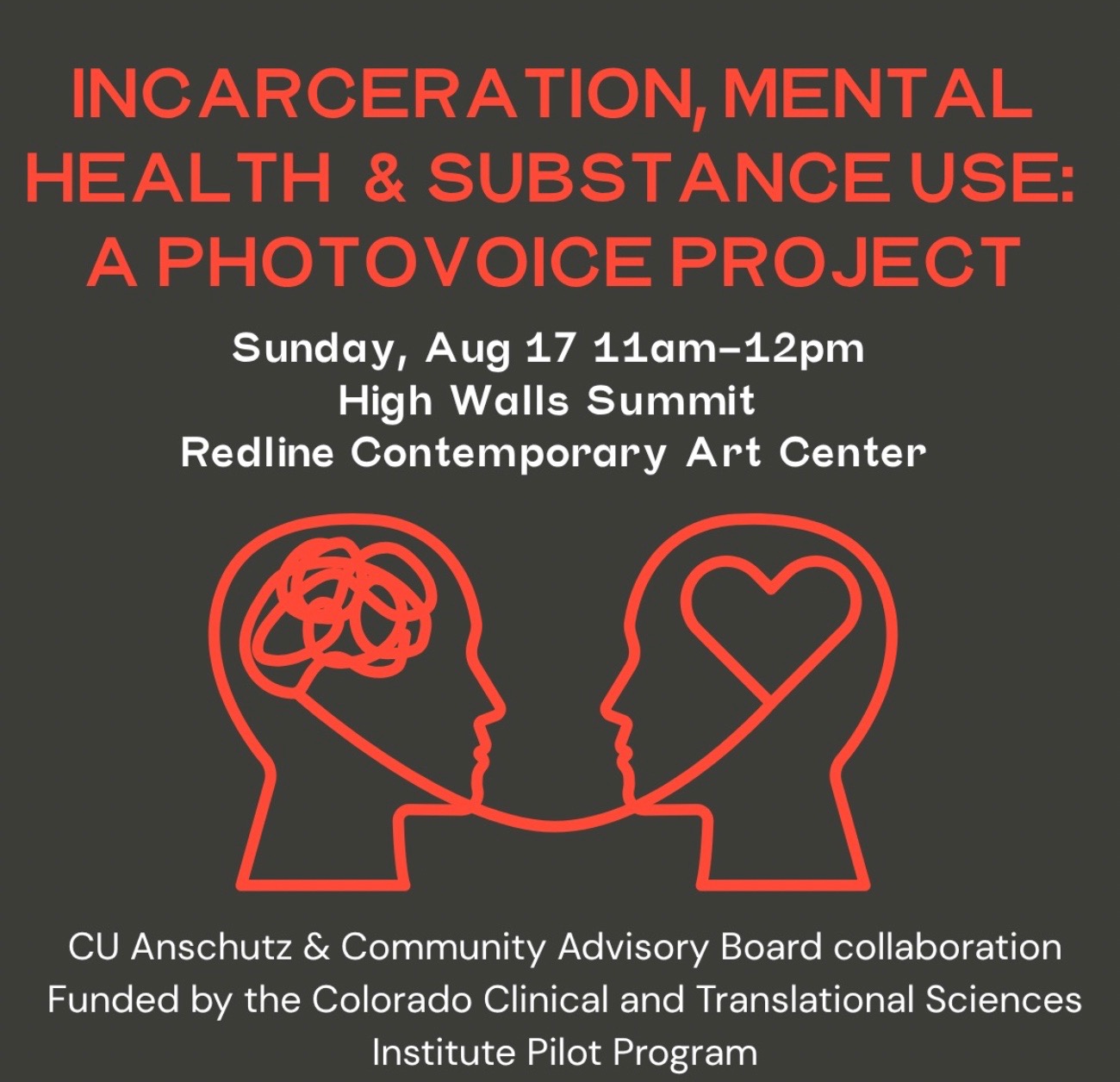
Photovoice at High Walls was a community-led photovoice project on incarceration, mental health, and substance use, exhibited as part of the broader High Walls Summit at RedLine Contemporary Art Center in Denver on August 17, 2025.
The High Walls Summit was a two-day community event exploring the impact of incarceration and the criminal legal system on individuals, families, communities, and society. The summit was connected to RedLine’s exhibition High Walls: Artists Navigate Structures of Confinement, presented in collaboration with Unchained Voices. Our photovoice project was one of several community-centered projects, conversations, and creative offerings featured within the summit.
The photovoice project was co-led by Dr. LeMasters and Betsy Craft alongside Macht, Walker, Moffett, McConnellogue, and Wise, community advisory board members with lived expertise related to substance use, mental health, and/or incarceration in the Denver metro area.
About the Method
Photovoice is a participatory research method where community members take and discuss photographs that document their lived realities, then use those images to drive dialogue, analysis, and advocacy.
For this project, photovoice was paired with a Community Advisory Board–guided structure, qualitative analysis, and public exhibition. Showing the work at High Walls Summit helped move the findings beyond academic spaces and into a public arts setting where Denver residents could encounter the stories, analysis, and expertise of people directly impacted by incarceration, mental health, and substance use systems.
Related Work
This project is part of a broader CU Anschutz jail-based research study examining mental health and substance use needs among people incarcerated in Denver metro-area jails. I co-lead this work with Dr. Katherine LeMasters, an epidemiologist and assistant professor at the University of Colorado Anschutz Medical Campus, through a Community Engagement and Health Equity Pilot Grant.
We designed this jail-based study after collaborating on the qualitative arm of a broader research project examining Colorado’s HB22-1326 Fentanyl Accountability and Prevention Act. One publication from that work, “You can’t incarcerate yourself out of the drug problem in America:” A qualitative examination of Colorado’s 2022 fentanyl criminalization law, examined the impacts of increased fentanyl criminalization on communities, systems, and public health responses.
Through that research, we recognized a major gap: people currently incarcerated were largely missing from the conversation, even though they are directly impacted by the policies and systems being studied. This jail-based project was created to hear directly from incarcerated people and bring their perspectives into research, policy, and systems-change conversations.
Citation: LeMasters, K., Nall, S., Jurecka, C., Craft, B., Christine, P., Binswanger, I., & Barocas, J. (2025). “You can’t incarcerate yourself out of the drug problem in America:” A qualitative examination of Colorado’s 2022 fentanyl criminalization law. Health & Justice, 13(26). https://doi.org/10.1186/s40352-025-00334-8
A related conference poster, “They Shouldn’t Have to Go Through That: Improving Mental Health and Substance Use Needs During Jail Incarceration and While on Probation in Colorado,” was presented at the Drug Policy Alliance Reform Conference in Detroit in November 2025.
The poster shared findings from two connected sister studies: a jail-based qualitative study with people incarcerated in Denver metro-area jails, and a community-led photovoice project guided by a Community Advisory Board of people with lived expertise related to incarceration, mental health, and substance use. Together, these studies highlight the need for community-informed, non-carceral responses to behavioral health needs among people impacted by jail incarceration and probation in Colorado.